
Menu



When a business owner considers filing for Chapter 11 bankruptcy, understanding the timeline of the process is crucial. After a case begins, it proceeds under specific, detailed timeframes, with deadlines that must be followed. In this discussion, our experienced Chapter 11 lawyers at Wernick Law PLLC provide an overview of the Chapter 11 bankruptcy timeline.
Most Chapter 11 cases start with a petition filed by a business under the primary statutory process, although a small business or individual may qualify for a different process. The Chapter 11 bankruptcy timeline starts when the debtor files a Chapter 11 bankruptcy petition in the federal bankruptcy court where the debtor has a domicile, residence, or principal place of business.
The petition includes detailed official forms and accompanying schedules, along with additional information. Motions may accompany the petition or be filed immediately thereafter, requesting court actions that relate to the continuation of the business. The process moves quickly as soon as the petition is filed. The first day of hearing typically occurs within 48-72 hours.
Filing the Chapter 11 petition creates an automatic stay on debt collection, which prohibits most creditors from pursuing collections, payment requests, eviction, foreclosure, and other property seizure and collection processes. The business owner becomes a debtor-in-possession and may continue to control the assets, stay open, and run the business during the Chapter 11 case.
The Office of the U.S. Trustee sometimes forms an official creditors’ committee for the case, which is done within 14 days after the petition is filed. The committee makes decisions for all the unsecured creditors. In about 30 to 60 days after the filing of the petition, the 341 meeting of creditors takes place. At the meeting, the trustee, creditors, and committee members ask questions of the debtor concerning debts, income, assets, and other issues.
Unless the debtor requests and receives an extension, the debtor files a Plan of Organization and a Disclosure Statement within 90 to 120 days of the petition filing (depending on the type of case). The reorganization plan includes a classification of claims and proposes repayment terms for outstanding debts over a specific period of time, which is usually three to five years. The disclosure statement contains detailed information about the debtor’s financial affairs sufficient to enable a creditor to make an informed judgment about the reorganization plan.
The reorganization plan is the central component of the Chapter 11 case. After the court reviews and approves the disclosure statement, the creditors and other parties in interest review the reorganization plan. Parties may request modifications. Extensive discussions and negotiations often take place between the creditors and the debtor to refine the terms of the reorganization plan. The goal is to reach a plan that the creditors can approve.
The debtor may request extensions of time if there is difficulty developing a plan that the creditors will approve. The inability to reach agreement on the plan is the main reason that a Chapter 11 case may extend beyond the average timeline of six months to a year to complete. Alternatively, the court may deem the petition unsuccessful and dismiss the case or convert it to a Chapter 7 bankruptcy.
If the parties approve the plan, the debtor files the modified plan with the court for review and confirmation. The court reviews the plan to determine whether it meets specific criteria and legal requirements for confirmation (approval) by the court. If the court confirms the plan, the debtor is responsible for complying with the terms and agreements in the reorganization plan, and also typically receives a discharge of certain debts.
While legal representation is not required in a Chapter 11 bankruptcy case, the complexity of the proceedings makes it virtually essential to have guidance from a knowledgeable Chapter 11 attorney. Even before filing a petition, a business should get a full assessment of all the considerations and consequences of going through the Chapter 11 process. While representation by an experienced Chapter 11 attorney does not guarantee a successful outcome in a Chapter 11 case, it does ensure that a Chapter 11 action will not fail due to legal mistakes that derail the case.
Based in Boca Raton, Florida, Chapter 11 bankruptcy attorney Aaron Wernick has more than 20 years of complex bankruptcy experience. He is certified in business and consumer bankruptcy law from the American Board of Certification and is recognized by Chambers and Partners for bankruptcy and restructuring in the Florida Spotlight Guide for 2026.
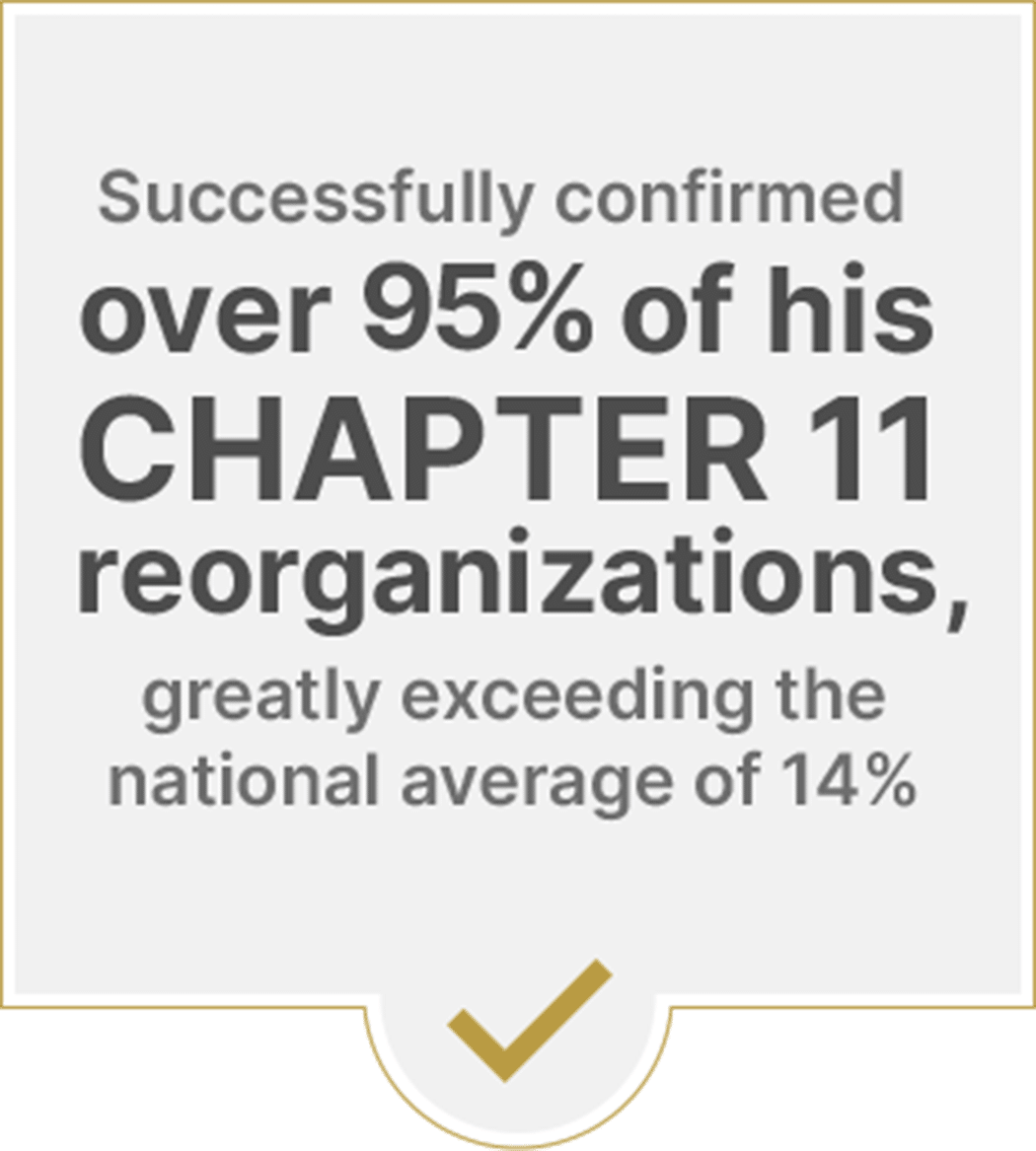
Aaron has secured reorganization plan confirmation in approximately 95% of his Chapter 11 cases. His record of success is exceptional, particularly compared to the nationwide average of 14%. Aaron attributes his accomplishments to his extensive experience and his finely honed business bankruptcy skills and knowledge. Aaron’s record demonstrates his ability to guide challenging and difficult cases through the complex Chapter 11 process by drawing on his keen negotiating and problem-solving skills. He strategically and efficiently pursues resolutions for disagreements while remaining steadfastly dedicated to protecting his client’s interests.
Wernick Law welcomes Florida business owners and individuals to schedule a consultation by calling tel:561-287-3050561-287-3050 or using our contact form.




© 2026 Wernick Law, PLLC
| View Our Disclaimer | Privacy Policy