
Menu



In a Chapter 11 bankruptcy case, a primary goal is securing creditor approval of the Plan of Reorganization proposed by the debtor-in-possession. If creditors object to the Plan, a debtor may request that the court utilize a provision in the Bankruptcy Code that requires creditors to comply with the proposed plan despite their objections. This action by the court is referred to as a “cramdown”. Legal representation by an experienced Chapter 11 bankruptcy lawyer is essential in requesting a court to use the cramdown provision of the Bankruptcy Code.
The Reorganization Plan is the central component of a Chapter 11 bankruptcy case. It proposes how the debtor will restructure and reorganize the business to address the financial issues. The Plan classifies the claims against the debtor and describes how each class of creditor will be treated under the Plan; in other words, how much each creditor will be paid and when.
After submission of the Plan to the court and the creditors, the debtor negotiates the terms of the Plan with the creditors. The ultimate goal is to secure approval of the Plan by a majority of the creditors and by the court. If the Plan is not approved by a sufficient number of creditors, one option that may be available to the debtor is to ask the court to approve the Plan over the creditors’ objections. The court has that authority under Section 1129(b) of the Bankruptcy Code, which is commonly referred to as the cramdown provision, although the Code does not use that term. Section 1129 (b) includes specific, detailed requirements that must be met for the court to grant a debtor’s cramdown request.
Generally, the two Code requirements for a cramdown are that (1) the cramdown must be “fair and equitable” to all of the creditors, with details on what that means provided in the Code section, and (2) that the cramdown must not result in “unfair discrimination” against any creditors. It is the debtor’s responsibility to satisfy the court that the requested cramdown would meet these requirements. The law on these issues is extremely complex, technical, and sophisticated. Not only do the Code provisions apply, but there is a great volume of case law on what meets each of the requirements.
A cramdown occurs when a bankruptcy court grants a debtor’s request to approve a Reorganization Plan over the objections of the creditors in the case. If the Plan otherwise meets all the Bankruptcy Code requirements for confirmation, and the court finds that the cramdown is fair and equitable and does not result in unfair discrimination, the court may grant a debtor’s cramdown request. The creditors have the opportunity to oppose a cramdown request and may be able to appeal an order granting a debtor’s request. The proceedings can be extremely complex.
A cramdown may occur in a Chapter 11 case as the debtor business works to restructure their debts to continue operations, if the court sees a feasible path for the debtor business and the reorganization plan does not discriminate against similar classes of creditors and treats all creditors fairly. A bankruptcy cramdown can affect both secured and unsecured creditors.
A cramdown is an option that needs to be analyzed and evaluated by an experienced Chapter 11 lawyer, based on the specific circumstances in a case. In addition to potential benefits, there are significant challenges and risks.
In an appropriate case, a cramdown may increase the long-term chances of survival of the business and the likelihood of success in the reorganization plan, improving the chances that the business will exit bankruptcy in a financially healthy position, despite the risks of requesting a cramdown. A debtor facing a situation where a cramdown appears to be a viable option must work with a knowledgeable Chapter 11 attorney to make the appropriate decision and manage the process through the court.
Having legal counsel does not ensure success in a Chapter 11 case, but guidance from a knowledgeable lawyer is essential to a successful outcome. Even before a petition is filed, an experienced Chapter 11 lawyer can provide a full assessment of the considerations and potential consequences for a business considering Chapter 11. Representation throughout the process ensures the best chance of successfully completing a Chapter 11 case.
Based in Boca Raton, Florida, Chapter 11 bankruptcy attorney Aaron Wernick has more than 20 years of complex bankruptcy experience. He is certified in business and consumer bankruptcy law from the American Board of Certification and is recognized by Chambers and Partners for bankruptcy and restructuring in the Florida Spotlight Guide for 2026.
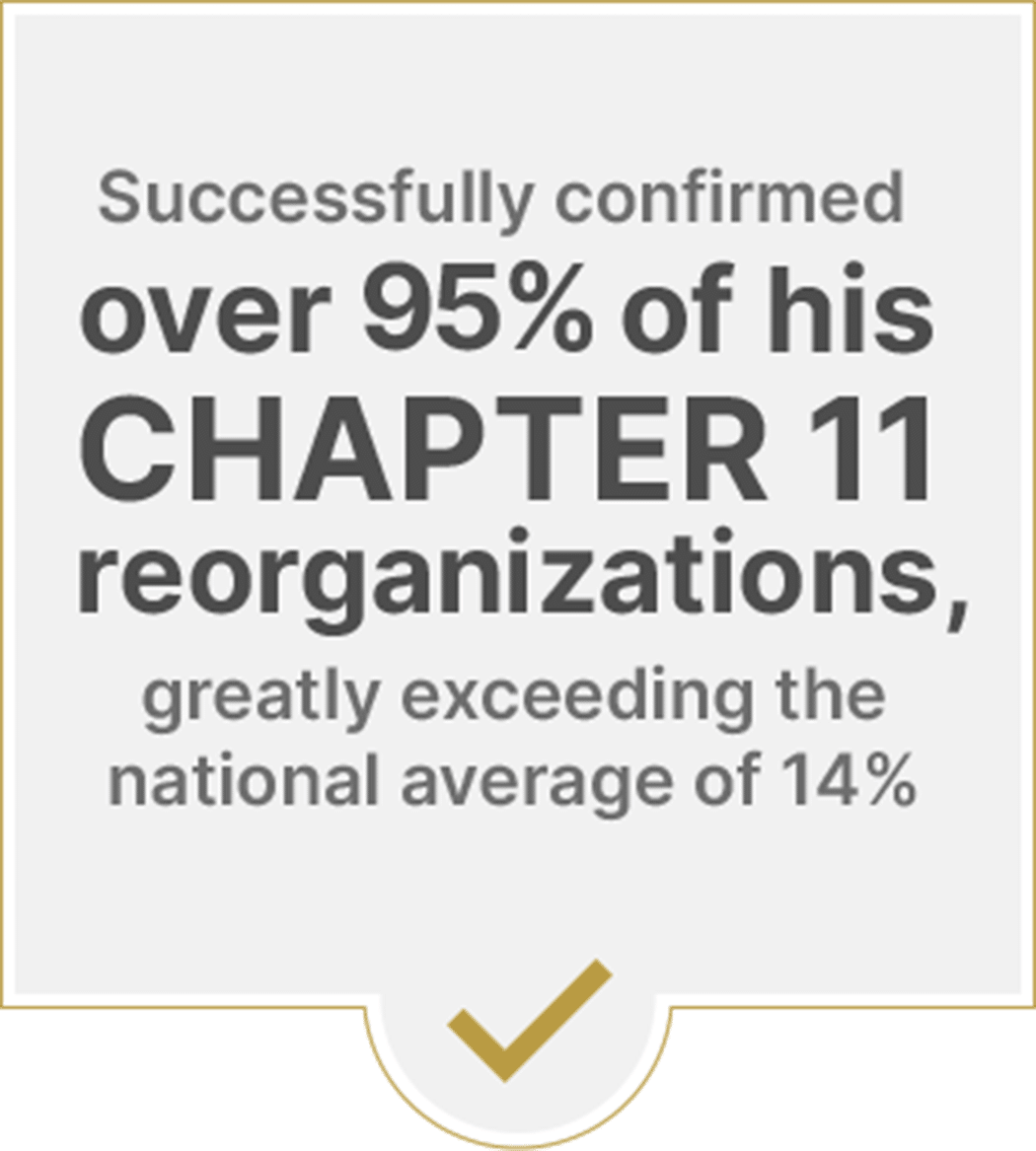
Aaron has secured reorganization plan confirmation in approximately 95% of his Chapter 11 cases. His record of success is exceptional, especially compared to the nationwide average of 14%. Aaron attributes his accomplishments to his extensive experience and his finely honed business bankruptcy skills and knowledge. Aaron’s record demonstrates his ability to guide challenging and difficult cases through the complex Chapter 11 process by drawing on his keen negotiating and problem-solving skills.
Wernick Law welcomes Florida business owners and individuals to schedule a consultation by calling 561-287-3050 or using our contact form.






© 2026 Wernick Law, PLLC
| View Our Disclaimer | Privacy Policy