
Menu


Overwhelming debt is often the reason that a business considers filing Chapter 11 bankruptcy. In addition, a business owner may face the financial burden of one or more civil actions in state court. When that is the case, a bankruptcy proceeding affects the pending state court actions. The effect depends on a number of factors, including the nature of the civil litigation, the debtor’s role in the case, and other issues relating to the court cases.
To understand how state court civil cases may be affected by Chapter 11 bankruptcy, it is important to understand the Chapter 11 process. The process is complex, with many detailed requirements.
A case begins with the filing of a petition by the debtor in federal bankruptcy court where the debtor has a domicile, residence, or principal place of business, including specific official forms and schedules. Detailed requirements and timelines apply to the case after the petition is filed.
Unlike Chapter 7 liquidation bankruptcy, which ultimately results in closure of the debtor’s business, the Chapter 11 process contemplates continuation of the business. During the Chapter 11 case, restructuring and reorganization enables the business to continue and operate more efficiently. The procedure requires the debtor to develop and submit a Plan of Reorganization to the court. The plan is then typically negotiated with the creditors. Ultimately, it must be approved by the court.
If there is pending state court civil litigation involving the debtor, those legal actions must be accounted for in the Plan of Reorganization.
If the Chapter 11 debtor is a defendant in a state court action, there may be an automatic stay on the action during the bankruptcy case, unless the type of action is exempted from the automatic stay provisions of the Bankruptcy Code. This typically "freezes" the state court action. If there are multiple defendants in the case, the automatic stay usually only applies to the defendant-debtor who filed the Chapter 11 petition. The case continues as to the other defendants.
Interested persons may petition the bankruptcy court to lift the automatic stay, in order for the state court action to continue with the debtor as a defendant. Alternatively, the plaintiff in the case may decide to eliminate the debtor as a defendant and proceed against the remaining defendants.
The pending state court litigation may end up being resolved as part of the Chapter 11 case. Our previous article, What Happens to Pending Litigation in a Chapter 11 Bankruptcy Case?, discusses additional details that apply to this situation.
If the Chapter 11 debtor is the plaintiff in a state court action, the cause of action is listed as an asset in the bankruptcy schedules and must be accounted for in the Plan of Reorganization, since a verdict or settlement for the plaintiff may be available to address or reduce outstanding debts.
If you are a business with pending civil litigation in state court or another type of pending civil proceeding, those matters may become part of the resolution of a Chapter 11 bankruptcy case. If you consider bankruptcy, it is imperative to disclose and discuss all pending legal proceedings with an experienced Chapter 11 bankruptcy attorney. It is also essential to discuss your consideration of bankruptcy with legal counsel representing you in any other type of legal proceeding.
At Wernick Law, our Chapter 11 practice includes addressing and resolving many different types of legal proceedings outside the bankruptcy case, including state court litigation. Types of related matters that we can address during a Chapter 11 case include:
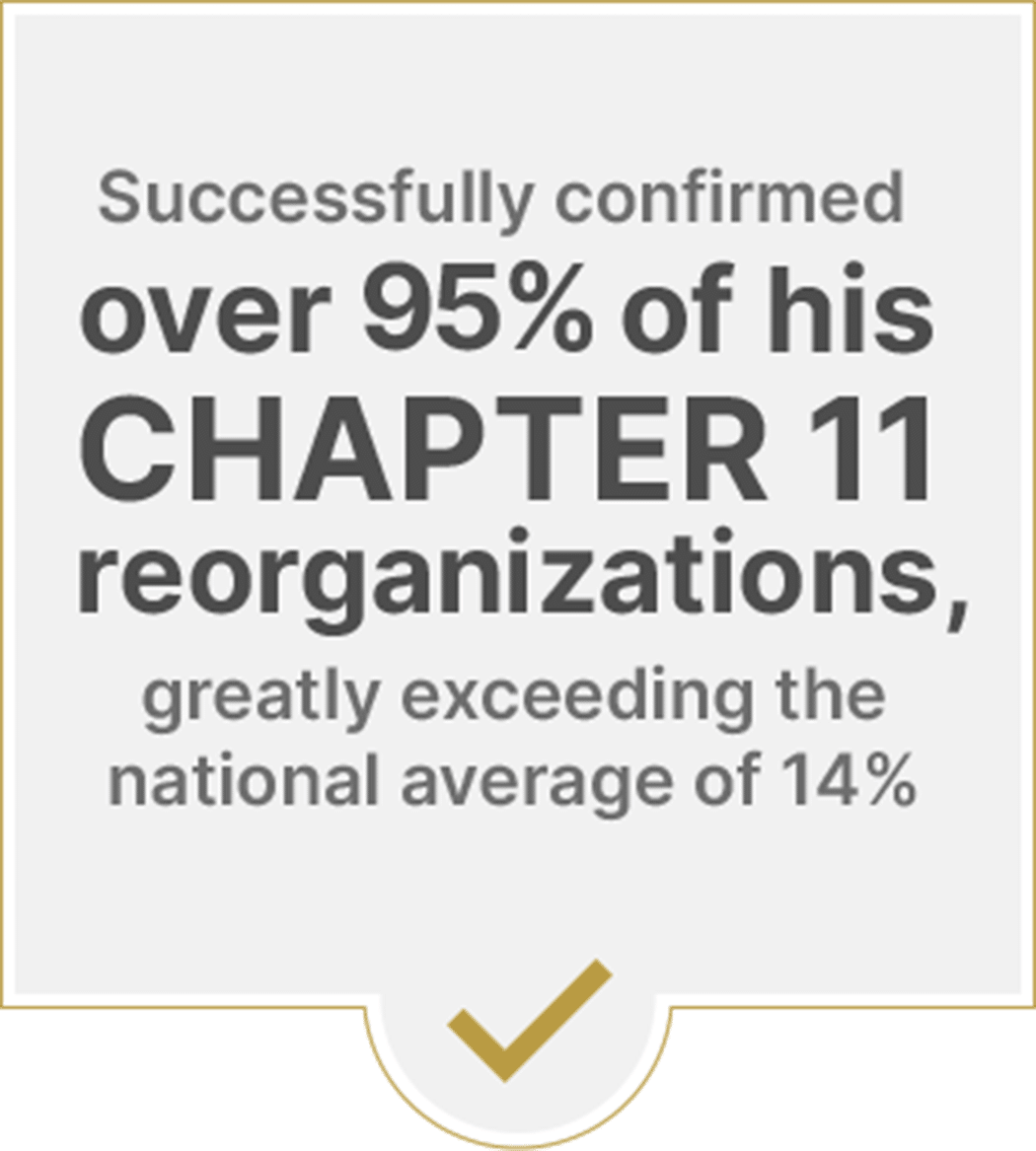
Aaron Wernick has built a stellar record of success in Chapter 11 bankruptcy cases, securing reorganization plan confirmation in approximately 95% of his cases. Aaron excels in Chapter 11 debtor representation due to his extensive experience and finely honed business bankruptcy skills and knowledge. His keen negotiating and problem-solving skills and his unwavering dedication to protecting his client’s interests enable Aaron to guide difficult, challenging cases to the finish line by advocating for the client, while strategically and efficiently pursuing solutions that lead to the resolution of disagreements.
Wernick Law welcomes Florida business owners and individuals to schedule a consultation by calling 561-287-3050 or using our contact form.




© 2025 Wernick Law, PLLC
| View Our Disclaimer | Privacy Policy